Higher education institutions handle some of the most sensitive, regulated data in the digital landscape. From student financial aid records and social security numbers to protected health information and intellectual property, a university database is a premium target for modern cyber threats.
Historically, this reality has forced academic software development into a corner. To protect student privacy and maintain compliance with FERPA, SOC 2, HIPAA, and GDPR, IT departments have traditionally treated security as a final, manual checkpoint. Development teams write code for months, only for the entire project to freeze at the finish line while an overstretched security team audits the release for vulnerabilities.
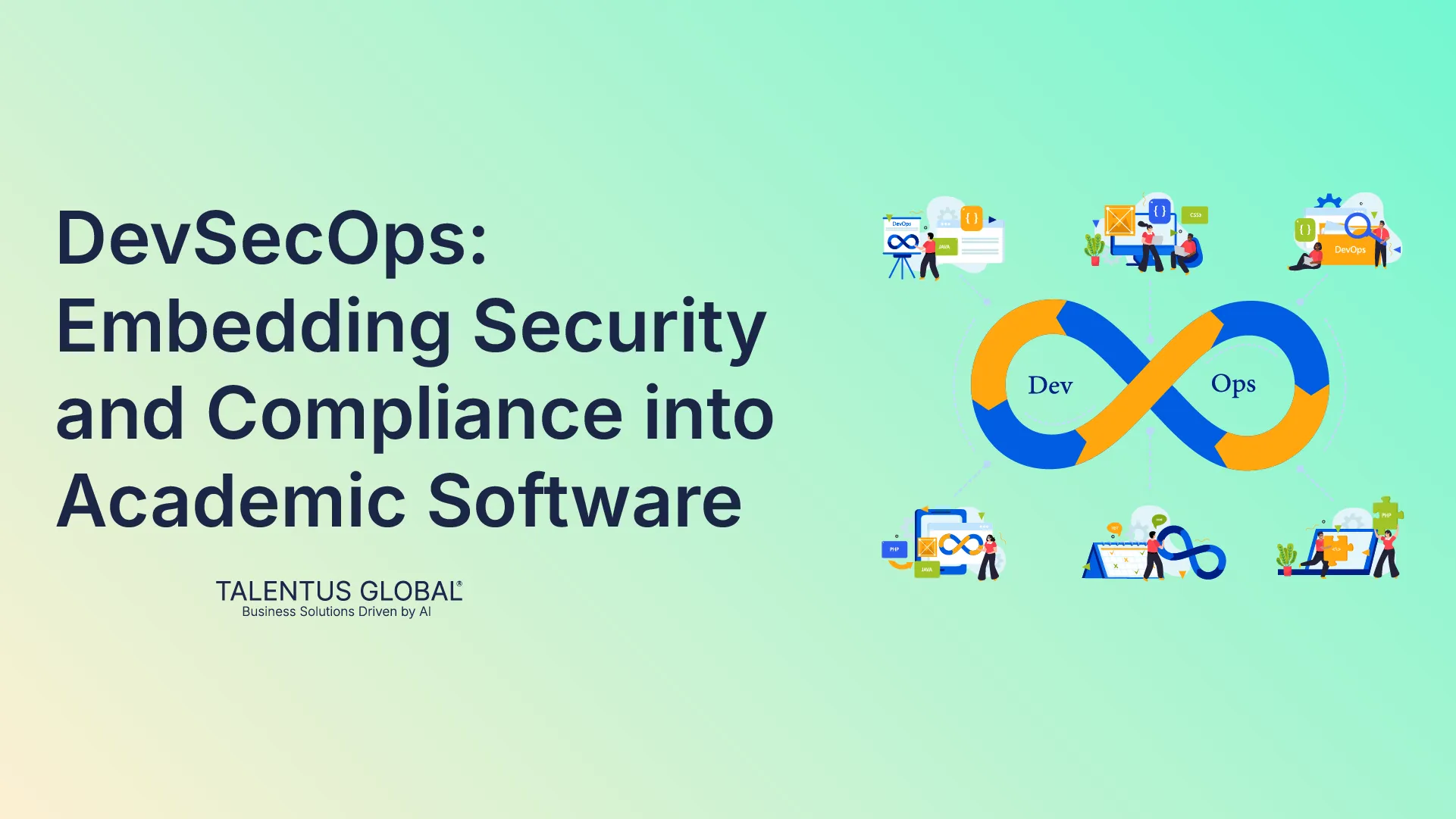
In 2026, this fragmented approach is a major operational liability. Security cannot be a roadblock to progress, nor can velocity compromise compliance. The modern higher ed tech stack requires DevSecOps, the practice of embedding automated security, governance, and compliance guardrails directly into every phase of the software development lifecycle.
1. The High Cost of Reactive Security
When security is treated as a separate phase at the end of a sprint or development cycle, friction inevitably builds. In academic software development, this reactive model introduces serious complications:
- Late-Stage Architecture Changes: Discovering a fundamental compliance flaw or data-exposure vulnerability right before launch forces developers to rewrite massive portions of core code, destroying project timelines.
- The Vulnerability Window: Open-source libraries and third-party dependencies frequently introduce zero-day flaws. Without continuous monitoring, outdated patches slip silently into production environments.
- Compliance Fatigue: Manually auditing data structures to prove FERPA or statutory compliance consumes hundreds of engineering hours that should be spent innovating.
Legacy Model: Design ──> Develop ──> QA Testing ──> Manual Security Review ──> Launch Blocked
DevSecOps Model: Design ──> Automated Security & Compliance Embedded in Every Sprint ──> Continuous Release
2. Shifting Security to the Left: Automated Compliance by Design
DevSecOps transforms security from a manual inspection gate into a continuous, programmatic utility. By "shifting security to the left" integrating it into the earliest stages of development—higher ed institutions can deploy features rapidly and confidently.
- Automated Code and Dependency Scanning
Modern DevSecOps pipelines utilize Static Application Security Testing (SAST) and Software Composition Analysis (SCA) tools. The moment an engineer commits code, automated scripts scan the syntax for known security flaws and inspect third-party packages for unpatched vulnerabilities. If a risk is detected, the pipeline automatically flags it for remediation before the code ever leaves the developer’s workstation.
- Programmatic Regulatory Guardrails
Compliance shouldn't rely on human memory. With DevSecOps, data masking, strict access controls, and encryption policies are written directly into the deployment infrastructure scripts. Testing environments automatically sanitize production data copies, ensuring that developer testing spaces remain entirely compliant with strict FERPA and data-privacy guardrails without requiring manual oversight.
3. The Guardrails Mandatory for Agentic AI
Building an airtight DevSecOps pipeline isn't just about protecting your current systems; it is the ultimate prerequisite for deploying Systems of Intelligence and Agentic AI workflows.
As institutions begin leveraging autonomous software agents to analyze live student behaviors, automate financial aid processing, or modify course enrollment criteria, the risks of unauthorized data exposure skyrocket. You cannot safely let an AI agent interact with a campus database unless that data layer is governed by automated, unbreachable security parameters. DevSecOps builds the immutable infrastructure guardrails that prevent AI tools from pulling data they shouldn't access or inadvertently exposing sensitive student data.
The Talentus Velocity
Implementing a mature DevSecOps culture requires highly specialized software engineers who understand both cloud security architecture and the unique compliance landscapes of higher education. At Talentus Global, we bridge this talent gap by deploying expert, fully vetted nearshore engineering and data pods. Our teams build automated security testing directly into your CI/CD pipelines, accelerating your product roadmap while keeping your compliance and security frameworks entirely bulletproof.
Let's accelerate your institution together!