In 2026, the conversation has shifted from "Will AI replace humans?" to "How fast can humans and AI collaborate?" The most successful enterprises are no longer those with the most advanced algorithms, but those that have mastered Agentic AI Orchestration, the seamless integration of autonomous AI agents into human-led engineering and creative pods.
At Talentus Global, we believe the future of Workforce Optimization isn't about reducing headcount; it’s about increasing the "Cognitive Ceiling" of every team member. By combining the Top 5% of Nearshore talent with cutting-edge AI support, we are architecting the most efficient teams in the history of tech.
1. From "Copilots" to "Agents"
In 2024, AI was a tool you talked to (Chatbots). In 2026, AI is a team member you delegate to (Agents). Modern Workforce Optimization utilizes "Agentic Workflows" where AI agents handle the high-volume, repetitive tasks—code documentation, regression testing, and data cleaning—allowing human engineers to focus on high-level architecture and strategic problem-solving.
The Optimization: Human-led strategy + AI-executed tactics.
The Result: A 40% increase in sprint velocity without increasing the human burn rate.
2. The Rise of the "AI Orchestrator"
As AI takes over the "execution" layer, the most valuable human skill in 2026 is Orchestration. Employers are no longer just looking for developers; they are looking for "AI-Augmented Leads" who can manage a distributed Dedicated Cluster of both humans and autonomous agents.
Talentus Strategy: Our Smart Sourcing marketplace specifically vets for candidates who demonstrate "AI-fluency"—the ability to integrate AI tools into their daily workflow to deliver 10x output.
3. Solving the "Communication Latency" with AI
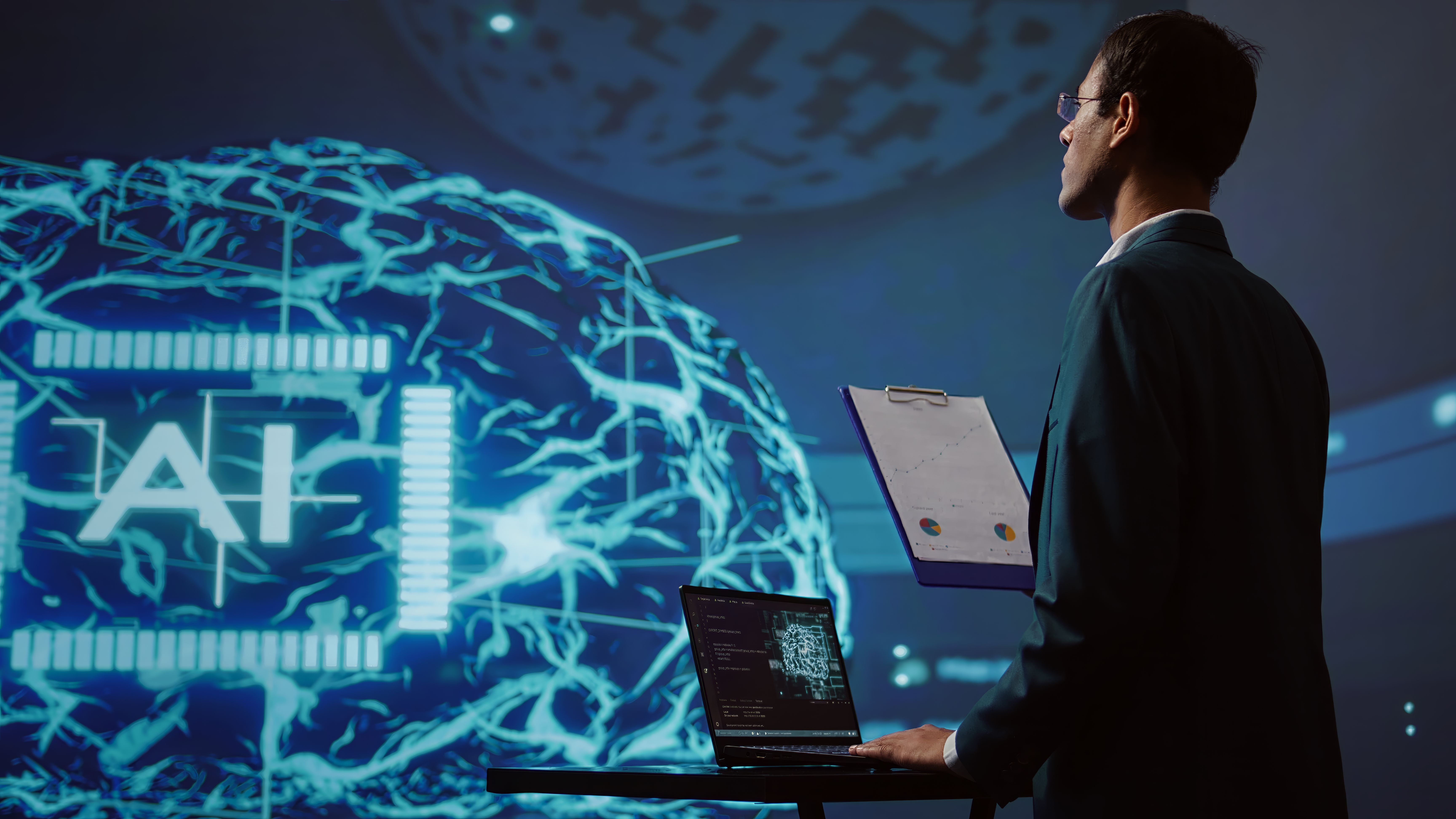
One of the biggest friction points in a global workforce is the "Information Gap." In 2026, AI-powered collaboration tools are bridging the gap between Onshore leaders and Nearshore clusters by providing real-time, context-aware summaries of meetings, code changes, and project status.
The Synchronized Edge: When your LatAm talent is already in your time zone, AI-augmented collaboration ensures that no context is lost, even in high-speed Agile environments.
4. Managed IT: The Infrastructure of Collaboration
For AI and humans to collaborate safely, the underlying infrastructure must be bulletproof. Scaling an AI-augmented workforce requires a Managed IT framework that supports high-compute workloads and ensures that proprietary data used to train local AI agents remains secure and compliant.
Conclusion: The Augmented Advantage
The future of work isn't a zero-sum game between humans and machines. It is a synchronized dance of Cognitive Performance. Companies that embrace this collaboration, and source the specialized talent capable of leading it, will dominate the 2026 landscape.
Ready to lead the AI-human revolution?
Find your next AI-augmented lead or dedicated pod in 48 hours at the Talentus Marketplace.