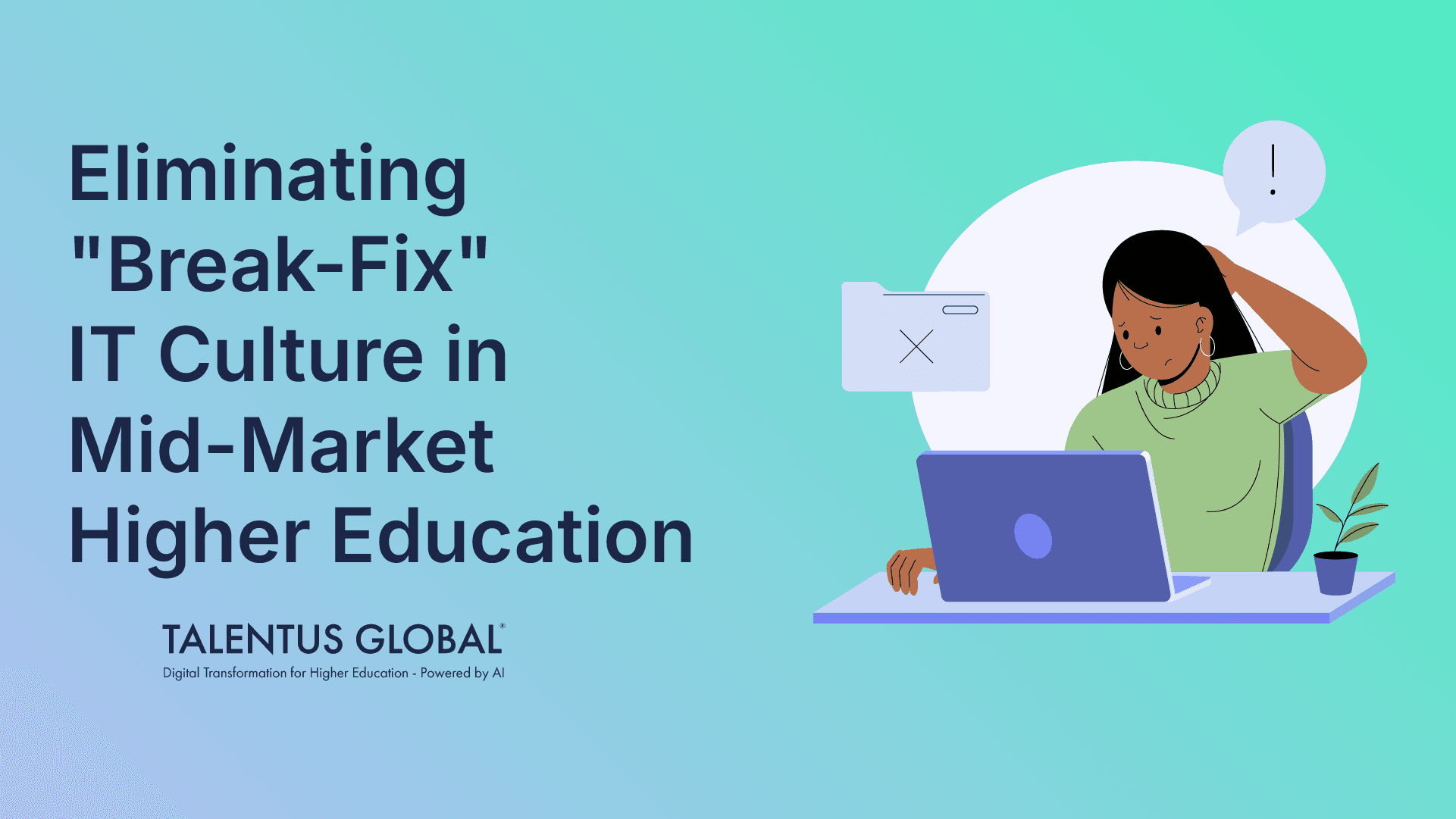
Mid-market colleges and universities frequently find themselves trapped in a state of perpetual IT firefighting. With lean internal teams and legacy technical debt, campus technology departments spend up to 80% of their time responding to emergency tickets, fixing broken batch imports between Banner and Canvas, and applying band-aid patches to aging infrastructure.
This reactive "break-fix" IT culture drains institutional budgets, burns out internal staff, and delays critical digital transformation projects like predictive student retention or unified enrollment portals.
To stay competitive and deliver modern digital experiences to students and faculty, mid-market higher ed leadership must transition from reactive firefighting to a proactive, managed engineering posture.
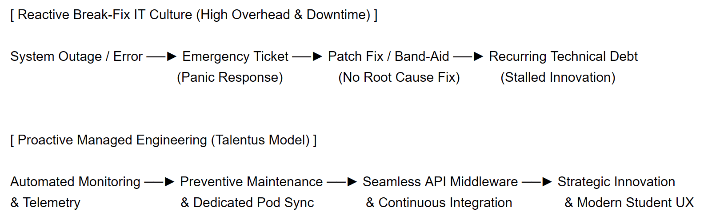
The Hidden Costs of Reactive IT Firefighting
Operating in a constant break-fix cycle creates severe systemic liabilities across the campus ecosystem:
- Compounding Technical Debt: Quick patches and undocumented custom scripts quickly become fragile single points of failure that collapse during high-traffic events like semester registration.
- IT Staff Burnout and Turnover: Database administrators and system engineers who spend their days extinguishing preventable fires experience high fatigue, leading to voluntary turnover and lost domain knowledge.
- Stalled Institutional Initiatives: When internal teams are consumed by routine maintenance and emergency repairs, strategic priorities, such as modernizing the SIS or launching campus AI initiatives, are repeatedly deferred.
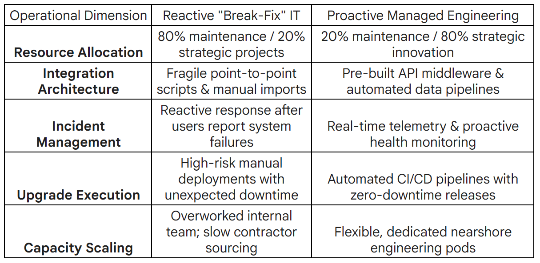
Reactive "Break-Fix" IT vs. Proactive Managed Engineering
Shifting from reactive maintenance to modern integration engineering stabilizes campus systems and frees up internal IT capacity:
3 Pillars for Transitioning to Proactive Campus IT
Overcoming break-fix culture requires mid-market institutions to modernize their talent pipelines and software integration frameworks:
1. Modernize Custom Scripts with Standardized API Middleware
Replace fragile custom batch scripts with standardized integration layers. Utilizing pre-built EdTech Connectors ensures data flows seamlessly between Canvas, Element451, Banner, and Thesis Elements without requiring daily developer intervention.
2. Augment Internal Teams with Dedicated Nearshore Engineering Pods
Mid-market IT teams rarely have the bandwidth to manage day-to-day system maintenance while simultaneously building custom software. Augmenting internal staff with dedicated nearshore LATAM software engineering pods offloads technical maintenance and accelerates roadmap execution.
3. Implement Automated Health Telemetry and Preventive Audits
Deploy continuous monitoring across campus API endpoints, database health, and data synchronization flows. Automated telemetry identifies latency spikes and data mismatches before they cause system outages or disrupt student registration.
Modernize Campus Technology with Talentus Global
Overcoming a break-fix IT culture requires specialized engineering bandwidth and deep higher education domain experience.
Talentus Global provides the technical expertise and nearshore capacity to stabilize and modernize your campus IT stack.
For over 30 years, Talentus Global has been a trusted technology partner in enterprise transformation and Higher Ed engineering. Through our nearshore LATAM Global Delivery Centers, we deploy pre-vetted software engineering pods specialized in campus system integration (Canvas, Slate, Banner, Workday), cloud middleware, and enterprise data architecture.
Our nearshore developers integrate directly into your IT department during your exact US business hours (EST/CST)—offloading technical debt and enabling your internal team to focus on strategic campus initiatives.
- 100% US Timezone Alignment: Collaborate synchronously with senior developers during standard EST/CST working hours.
- Deploy in 48 Hours: Skip 60-day domestic recruitment friction and deploy specialized engineering pods immediately.
- 95% Developer Retention Rate: Protect institutional context and maintain multi-year architectural stability.
Stop firefighting. Transition to proactive campus engineering with Talentus Global today.