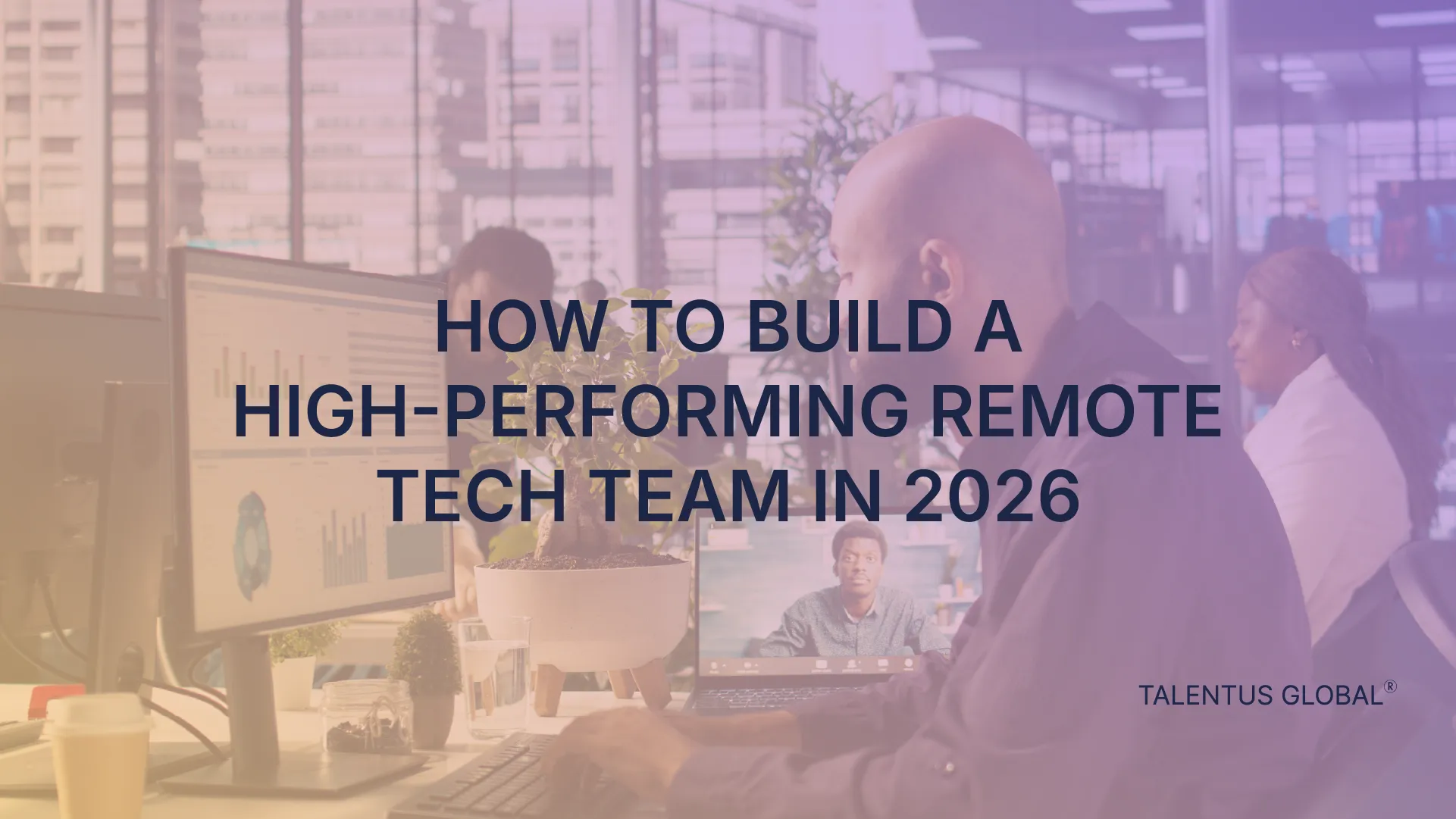
In 2026, "remote work" is no longer a perk or a temporary adjustment—it is the baseline for global tech competition. However, there is a massive difference between having a distributed workforce and having a high-performing remote ecosystem.
The companies winning the 2026 roadmap are those that have moved beyond basic Slack channels and Zoom calls. They are building synchronized tech clusters that prioritize velocity, cultural alignment, and "Smart Sourcing."
1. Prioritize Time-Zone Synchronization (The Nearshore Edge)
The biggest silent killer of remote productivity is latency. If your US-based product owner has to wait 12 hours for a response from an offshore developer, your sprint velocity is effectively cut in half.
The 2026 Standard: High-performing teams are leaning into Latin American Nearshore hubs. By aligning teams within 0-3 hours of the head office, collaboration happens in real-time, not over-night.
2. Implement "Pod-Based" Scaling
Hiring individual freelancers often leads to fragmented culture and inconsistent code quality. High-performing organizations are now hiring Dedicated Clusters.
Why it works: These pods come pre-vetted and pre-assembled with a Lead Engineer, QA, and a Project Manager. This "plug-and-play" model ensures that the team arrives with built-in synergy, hitting peak performance on Day 1.
3. Lean on Managed IT Infrastructure
A remote team is only as strong as the tools that support them. Managing hardware, security protocols, and software licenses across borders can be an operational nightmare.
The Solution: Strategic leaders use Managed IT Services to handle the heavy lifting. When your remote team has a seamless, secure, and standardized IT environment, they spend 100% of their time on code and 0% on troubleshooting their workstations.
4. Cultural Integration through Smart Sourcing
Technical skill is a commodity; cultural synchronization is a competitive advantage. High-performing remote teams share the same business "language" and Agile mindsets.
The Talentus Filter: Our marketplace doesn't just vet for Python or React; we vet for the communication skills and "ownership mindset" required to thrive in a high-velocity remote environment.
Conclusion: Leading the Distributed Future
Building a high-performing remote team isn't about finding the cheapest talent—it's about finding the most synchronized talent. By leveraging Nearshore proximity and pod-based structures, you turn a distributed workforce into a unified growth engine.
Ready to build your 2026 dream team?
Select your specific roles in 48 hours via the Talentus Marketplace.