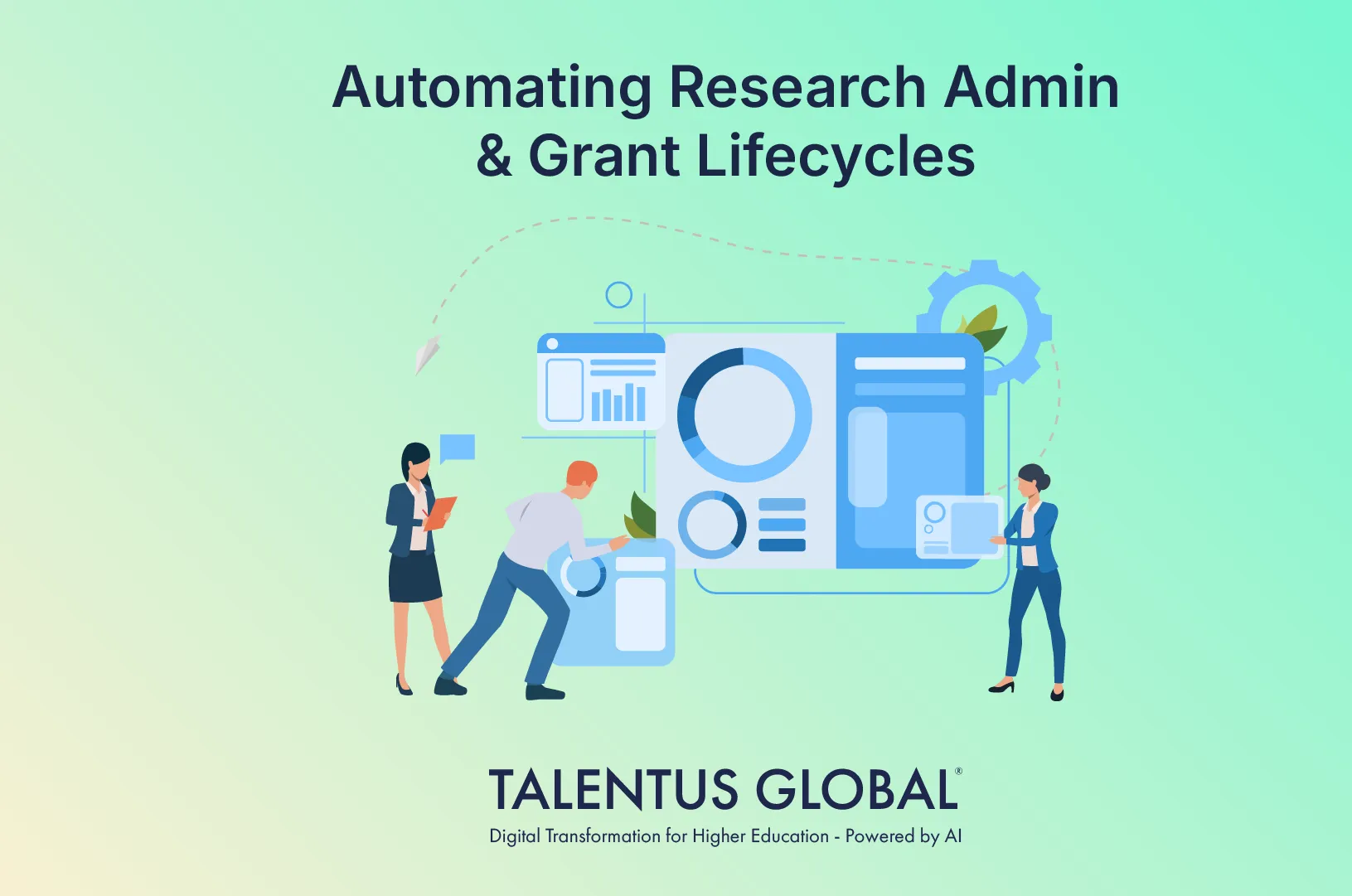
Higher education research institutions manage hundreds of millions of dollars in federal, state, and private grant funding.
However, securing these awards is only half the operational challenge. Maintaining grant eligibility requires rigorous, defensible compliance reporting. When financial ledgers, effort allocations, and research deliverables reside in disconnected departmental spreadsheets and aging campus systems, institutions face severe audit risks—including financial clawbacks, administrative penalties, and disqualified future grant applications.
Maximizing grant funding requires moving away from retrospective, manual auditing toward automated, transparent data lineage. By building continuous data pipelines that track expenditures, time allocations, and project milestones from initial ingestion to final reporting, higher ed IT leaders can guarantee compliance while reducing administrative burden across campus research offices.
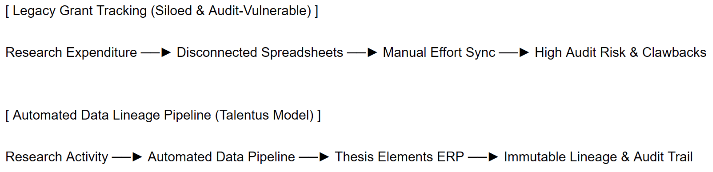
The High Cost of Opaque Grant Reporting
Relying on fragmented databases, manual data transfers, and ad-hoc spreadsheets to manage research compliance introduces severe institutional vulnerabilities:
- Financial Clawbacks and Penalties: Federal auditors require verifiable proof that every dollar charged to a grant directly supports its designated scope. Unsubstantiated expenditures or mismatched effort reports lead to mandatory funding repayments and hefty fines.
- Massive Administrative Overhead: Research administrators and principal investigators (PIs) spend thousands of hours each year manually reconciling financial ledgers, payroll records, and effort reports instead of focusing on research outcomes.
- Reputational Damage and Lost Future Awards: A failed audit or public finding of non-compliance jeopardizes an institution’s standing with major funding bodies like the NIH, NSF, and private foundations—threatening future grant pipelines.
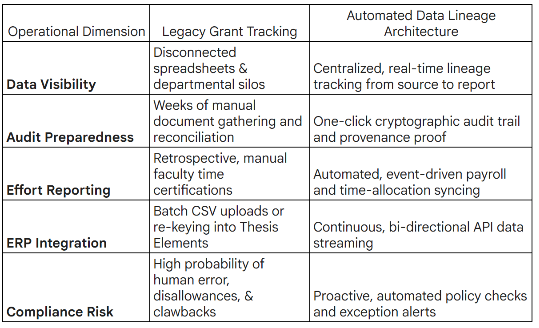
Legacy Grant Tracking vs. Automated Data Lineage Architecture
Modernizing research administration infrastructure transforms grant compliance into an automated, audit-proof competitive advantage:
3 Pillars of Transparent Grant Data Lineage
Constructing a transparent, audit-ready data lineage architecture for research administration relies on three core technical pillars:
1. End-to-End Data Provenance & Immutable Audit Logs
Track the complete lifecycle of every grant dollar. Modern data lineage pipelines log where data originates, how it is transformed, and where it is reported. By maintaining immutable, time-stamped logs across all financial and operational data transformations, IT teams can produce full provenance trails in seconds during an audit.
2. Real-Time ERP and Research System Interoperability
Eliminate manual re-keying between grant tracking platforms, payroll systems, and central financial databases. Bi-directional API middleware automatically streams financial transactions and effort allocations directly into core systems like Thesis Elements ERP, keeping institutional ledgers continuously synchronized.
3. Automated Policy Engines & Effort Certification Workflows
Deploy rule-based policy engines that validate expenditures against specific grant constraints in real time. Automated workflows flag unallowable costs, budget overruns, or effort imbalances before transactions post—enabling research administrators to resolve compliance issues proactively.
Maximize Your Research Infrastructure with Talentus Global
Building transparent data lineage pipelines and integrating enterprise research systems requires senior data engineers, API architects, and deep Higher Ed domain expertise.
Talentus Global provides dedicated nearshore LATAM software engineering pods to design, integrate, and scale your campus data infrastructure.
For over 30 years, Talentus Global has been a trusted technical partner in enterprise software engineering and Higher Ed digital transformation. Our nearshore developers specialize in cloud data engineering, data lineage frameworks, API middleware development, and ERP/SIS integrations (Thesis Elements, Ellucian).
Operating 100% synchronously in your US timezone (EST/CST), our pre-vetted LATAM engineering pods deploy in as little as 48 hours to accelerate your research administration and data modernization roadmaps without domestic hiring friction.
- 100% US Timezone Alignment: Collaborate synchronously with senior developers during standard EST/CST working hours.
- Deploy in 48 Hours: Bypass domestic recruitment delays and launch specialized data engineering pods immediately.
- 95% Developer Retention Rate: Retain deep institutional knowledge and codebase stability across multi-year modernization roadmaps.
Guarantee grant compliance with transparent data lineage. Learn more abour our EdTech solutions clicking here