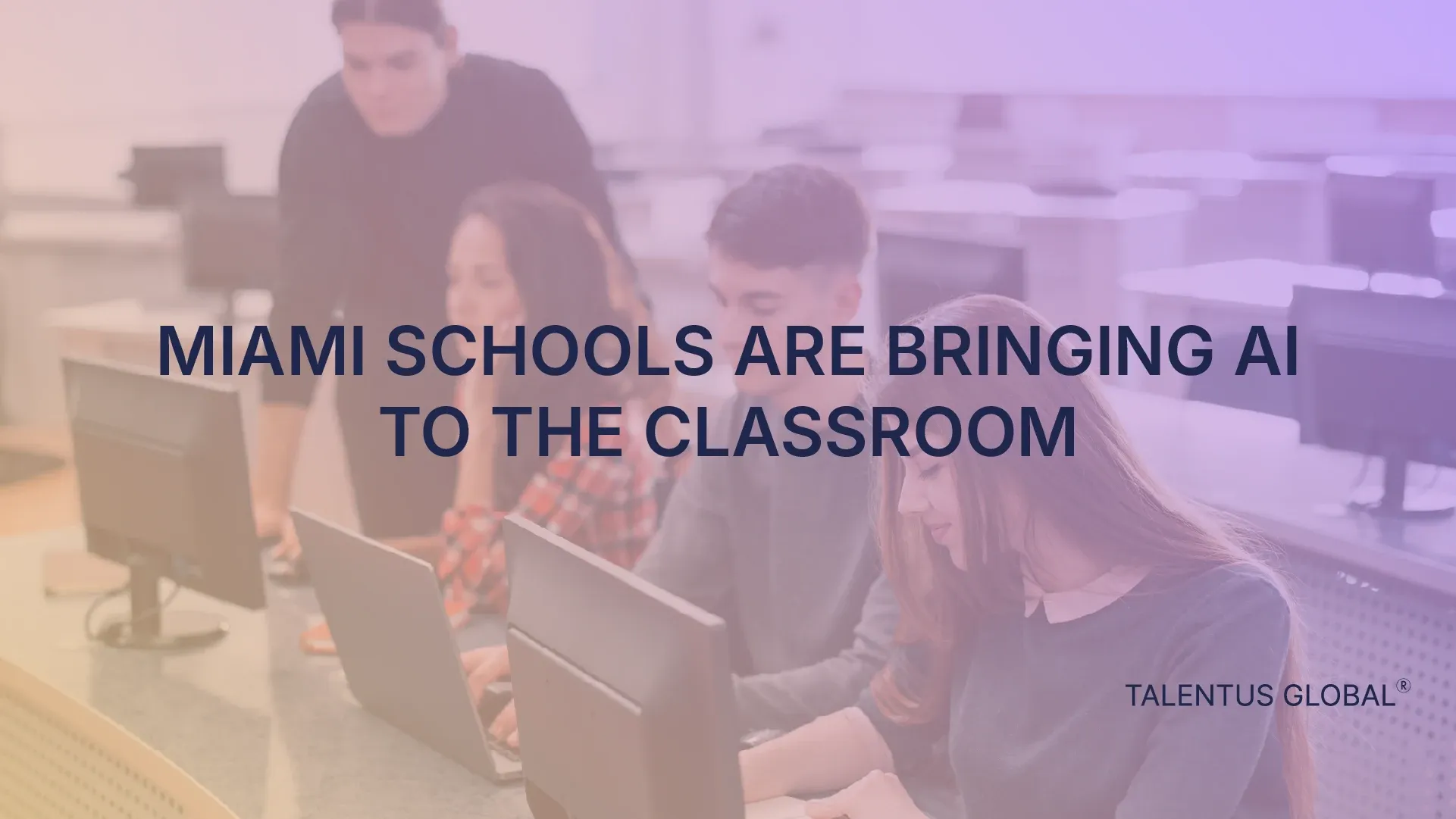
Once skeptical of generative AI, Miami-Dade County Public Schools is now leading the way in classroom integration, showing how one of the nation’s largest districts is preparing over 100,000 students for an AI-driven future. Just two years after blocking access to AI chatbots like ChatGPT over concerns about cheating and misinformation, Miami-Dade County Public Schools—the third-largest district in the U.S.—has reversed course. Today, the district is executing the country’s largest school-based deployment of generative AI, giving over 105,000 high school students access to Google-powered chatbots and training more than 1,000 educators in their use. It’s a dramatic shift, emblematic of a broader national trend: schools once hesitant about AI are now racing to equip students with the tools and knowledge needed to navigate a rapidly evolving digital economy.
From Banned to Embraced
The move reflects a growing consensus that AI literacy is no longer optional. “Every student should have some level of introduction to A.I. because it’s going to impact all of our lives,” said Roberto J. Alonso, a member of the Miami-Dade school board.
Generative AI—tools that can compose essays, build quizzes, or summarize readings—brings both promise and risk. While these systems can enhance instruction and streamline workloads, they are also prone to fabrications and bias, making digital literacy and critical thinking more essential than ever.
Miami’s approach is cautious but committed: teachers are encouraged to use AI as a classroom assistant, not a replacement. Students are taught to vet chatbot responses and apply ethical thinking when using AI tools.
The New Normal in Education?
This pivot in Miami comes amid a national push to modernize education for an AI era. Industry giants like Google, Microsoft, and OpenAI are increasingly vying to become the go-to providers for educational AI platforms. Meanwhile, federal momentum is growing. In a recent executive order, President Trump called on schools to embed AI instruction across all grade levels, framing it as a matter of economic competitiveness.
Tech leaders have pitched ambitious visions of personalized, AI-powered tutoring systems that adapt to individual student needs in real time. However, critics caution against over-reliance on these tools, warning they could erode students’ capacity for independent thinking if used carelessly.
Guardrails and Guidance
For Miami, the goal is to strike a balance—integrating AI tools responsibly while keeping human judgment front and center. “AI is just another tool in the arsenal of education,” said Daniel Mateo, assistant superintendent of innovation at Miami-Dade and the architect of the district’s AI strategy. “We have to ensure it’s used ethically and with the right guardrails in place.”
Miami’s AI rollout is a bold experiment, one that could help define how U.S. schools teach, adapt, and innovate in the age of intelligent machines. The classroom of the future isn’t on the horizon—it’s already taking shape in South Florida.
We are Talentus: a global company that provides US companies with reliable IT services, near-shore talent, and support to meet their needs.