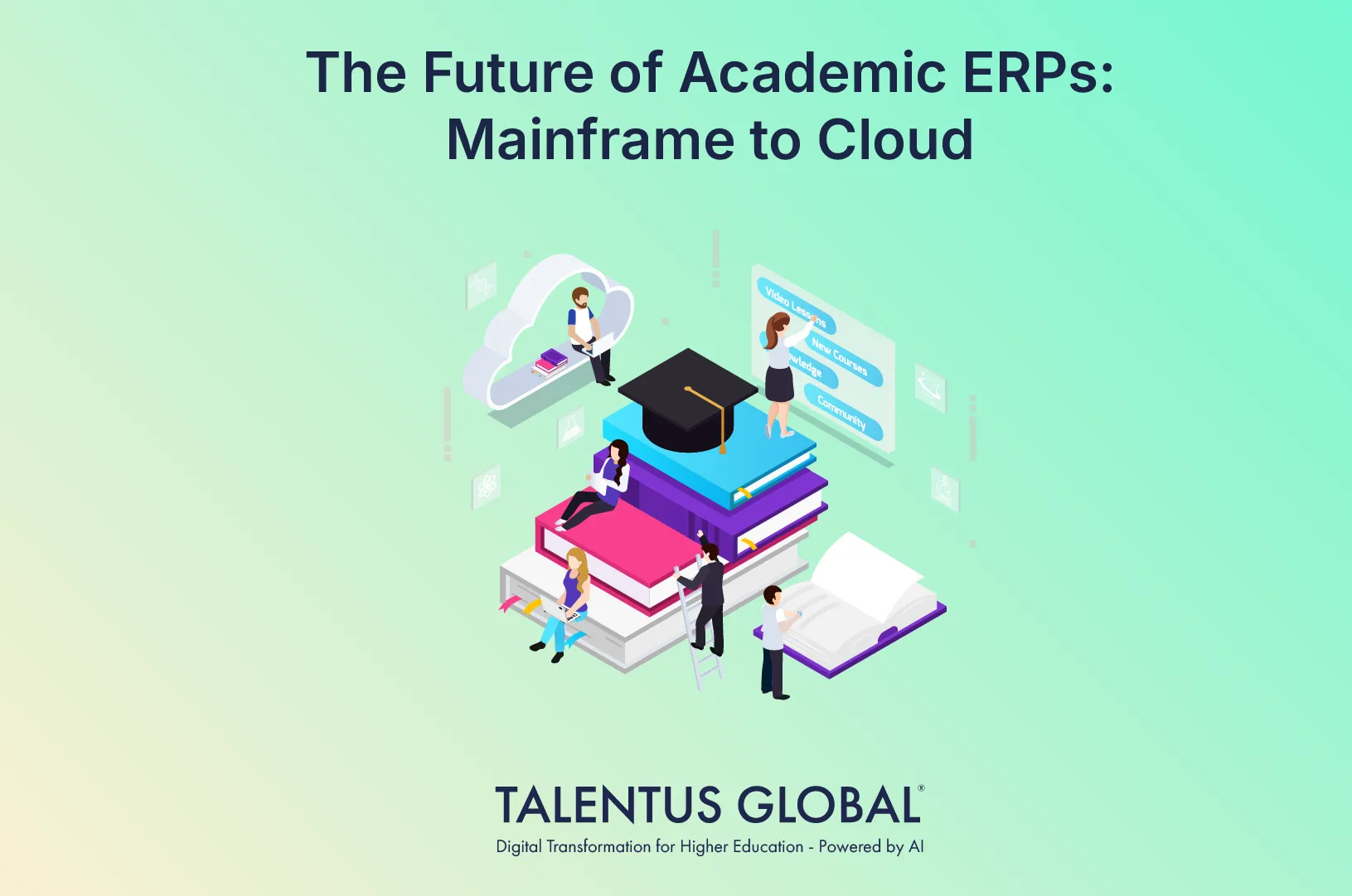
Every semester, university IT departments brace for the same inevitable crisis: registration week. As thousands of students simultaneously log in to secure their classes, the legacy Student Information System (SIS) groans under the weight of the traffic. Servers lag, portals crash, and the helpdesk is flooded with panicked tickets.
This recurring nightmare is the direct result of relying on monolithic applications. In a monolith, the user interface, business logic, and data access layers are all tightly interwoven into a single, massive codebase. If the course catalog module needs more computing power, you cannot scale it independently; you must allocate resources to the entire application.
For higher education institutions looking to optimize costs, improve scalability, and deploy advanced EdTech tools, migrating to a cloud-native architecture is no longer optional. However, refactoring a decades-old monolith into agile microservices carries significant risk. Without a precise mitigation strategy, universities face extended downtime, data corruption, and catastrophic budget overruns.
The Risks of the "Big Bang" Migration
Many institutions attempt a "Big Bang" migration, trying to rewrite and replace the entire legacy system in one massive deployment over a summer break. This approach almost always fails. It disrupts daily operations, overwhelms internal IT staff, and creates an unacceptable level of risk if the new system contains critical bugs upon launch.
To successfully refactor a monolith, universities must adopt the Strangler Fig Pattern.
Instead of replacing the system overnight, IT teams gradually extract specific functionalities (like student billing or course registration) and rebuild them as independent, cloud-native microservices. Over time, the new microservices "strangle" the legacy application until the monolith can be safely decommissioned.

By isolating services into cloud-native containers (using Kubernetes or Docker), institutions achieve resilient, on-demand scalability. When registration week hits, the system automatically spins up resources solely for the enrollment microservice, handling the surge flawlessly.
Execute High-Stakes Migrations with Talentus Global
Refactoring a monolithic SIS or ERP is a complex, multi-year engineering feat. It requires advanced expertise in cloud architecture, DevSecOps, and secure API data routing. Most university IT departments simply do not have the specialized personnel required to rebuild legacy systems while simultaneously keeping the lights on for current students.
This is where Talentus Global provides critical leverage.
As a global strategic solutions partner with over 30 years of experience in Higher Education and EdTech digital transformation, we build the API-first architectures and Zero-Trust DevSecOps environments modern universities demand.
Through our LATAM Global Delivery Centers (Colombia, Peru, Mexico, Argentina), we deploy pre-vetted, highly specialized nearshore software engineering pods. Operating synchronously in your exact timezone (EST/CST), our architects integrate seamlessly with your internal leadership. We provide the complex engineering bandwidth required to execute safe, incremental monolithic refactoring—allowing you to bypass the typical 60-day US hiring friction.
With an industry-leading 95% engineer retention rate, our pods ensure that the architects who design your cloud-native migration are the same experts who see it through to completion.
Stop repairing a failing monolith. Build a resilient digital campus with Talentus Global today.