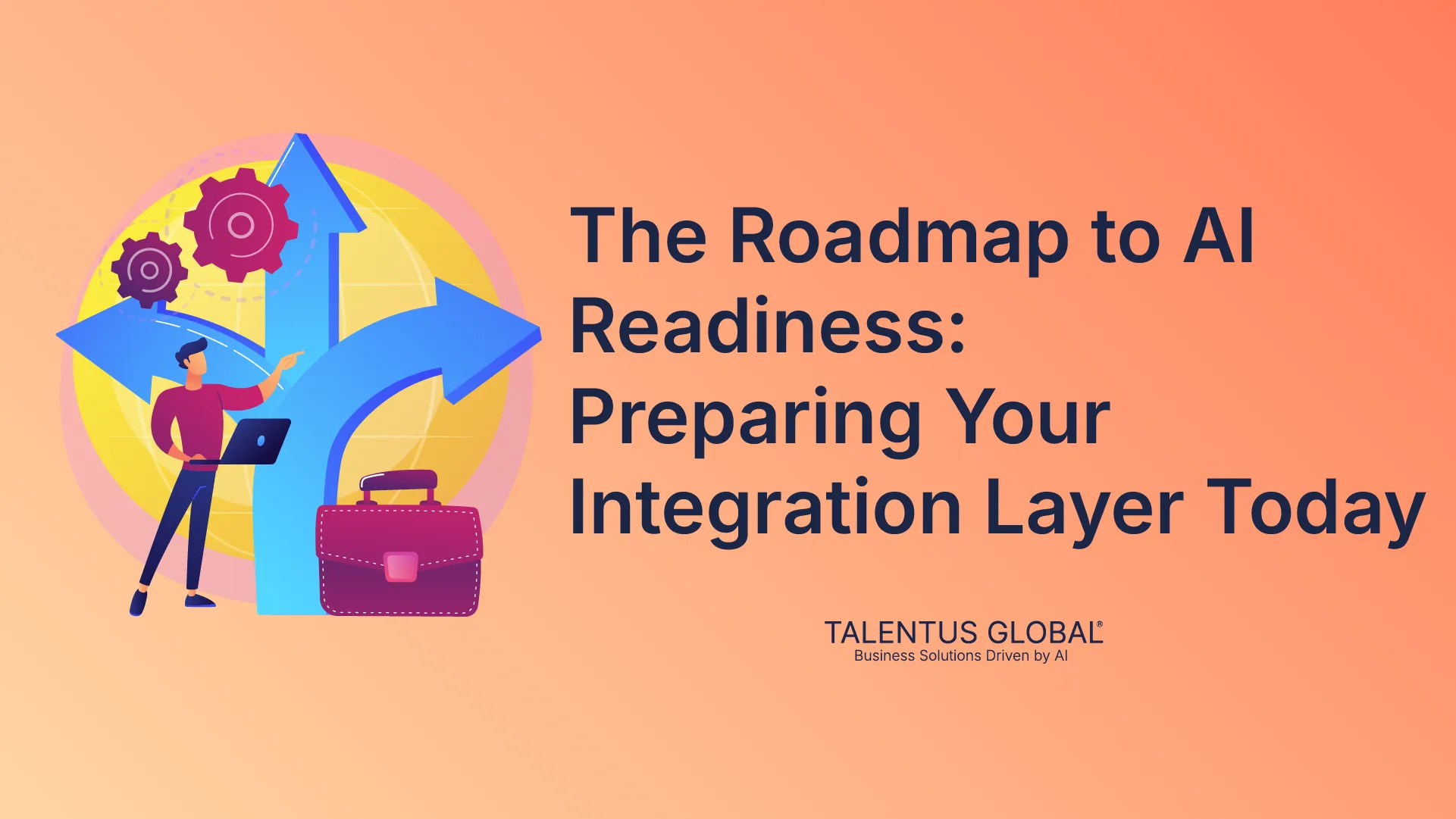
When technology leaders map out their transition toward Artificial Intelligence, the immediate instinct is to look at the models themselves. Teams spend weeks debating the merits of various Large Language Models (LLMs), evaluating open-source frameworks, or prototyping localized chatbots. But here is the reality facing enterprise engineering teams: your AI strategy is only as fast as your integration layer.
An advanced AI model without clean, systemic data access is essentially a brain without a nervous system. It can reason, but it cannot act.
As we progress through 2026, the landscape has shifted from basic generative text tools to Agentic AI, autonomous systems capable of orchestrating complex workflows, updating software systems, and handling multi-step cross-platform logic. If your underlying data is trapped behind rigid legacy code, fragmented APIs, or manual synchronization processes, your AI initiatives will stall at the prototype stage. Achieving true AI-readiness requires an aggressive modernization of your integration layer.
1. The Real Bottleneck: Legacy Debt vs. Intelligent Agents
Deploying AI in an enterprise environment introduces data gravity challenges that traditional middleware was never designed to handle. Forcing intelligent models to interact with brittle infrastructure results in clear operational bottlenecks:
The Latency Tax: Autonomous agents require microsecond access to contextual data. If an AI assistant has to wait on batch-processed data or poorly optimized API queries, the user experience breaks down instantly.
Context Fragmentation (The Data Silo Trap): To handle an administrative workflow, an AI agent might need real-time data from your CRM, your ERP, and your core transactional databases simultaneously. Missing integrations yield hallucinated outputs or broken actions.
Security and Governance Exposure: Passing sensitive enterprise data or proprietary intellectual property through unmonitored integration pathways poses immense regulatory compliance risks.
Rigid Infrastructure: Siloed Systems ──> Rigid Middleware ──> Brittle, Delayed AI Actions
AI-Ready Integration: Unified Data ──> [API-First Mesh ──> High-Velocity Autonomous Agents
2. Strategic Steps to Modernize Your Integration Layer
Transforming your IT infrastructure into an AI-ready ecosystem requires moving away from reactive patch-work and building a structured, API-first network.
Architecting an API-First Integration Mesh
AI agents communicate through APIs. To prepare your architecture, you must expose legacy functionalities as clean, reusable microservices. Implementing modern integration hubs like MuleSoft or Boomi allows you to build standard, secure digital bridges across your entire software ecosystem. This ensures that whether an AI agent needs to extract student records from a Student Information System (SIS) or pull client timelines from an enterprise CRM, it can do so via a normalized, high-performance API endpoint.
Implementing Event-Driven Data Pipelines
Intelligent workflows thrive on real-time execution. Relying on legacy nighttime batch updates means your AI is constantly making decisions based on old data. Transitioning to event-driven architectures ensures that system changes (e.g., a customer changing their account status or a student dropping a class) trigger immediate data synchronization across the entire network, keeping the AI's cognitive context perfectly accurate.
3. Fortifying Security & Governance for Cognitive Workflows
As you open up data access channels for intelligent automation, managing the security of your integration pathways becomes paramount.
System Components ──> Secure API Gateway / LLM Firewall ──> Enterprise AI Models
To deploy autonomous workflows with absolute confidence, engineering teams must establish robust API gateways and specialized AI firewalls. These architectural layers are responsible for:
Dynamic Tokenization: Stripping out Protected Health Information (PHI) or Personally Identifiable Information (PII) before data payloads are processed by external AI models.
Granular Access Control: Ensuring that an autonomous agent can only read or write to specific databases based on strictly defined system roles.
Proactive 24/7 Monitoring: Utilizing managed security services to actively monitor API calls for anomalous behavior or prompt-injection patterns designed to leak system architecture details.
The Talentus Velocity
Re-architecting your integration layer while maintaining daily operations requires deep systems engineering capacity and specialized cloud knowledge. At Talentus Global, we accelerate your transition by deploying elite, fully managed nearshore software development pods. Through our specialized division, https://talentusglobal.ai , we help enterprises refactor legacy systems, clear out technical debt, and construct secure API layers. By leveraging our LATAM engineering clusters, you gain the technical velocity needed to make your infrastructure entirely AI-ready without the friction of domestic tech talent shortages.
Let's build the unbreakable digital foundation your autonomous future demands.