University advancement offices rely on donor contributions to fund scholarships, research initiatives, and campus expansions.
However, advancement operations frequently hit major friction points when managing major gifts, recurring pledges, and matching contributions: the technology gap between donor-facing Customer Relationship Management (CRM) platforms like Element451 and central university financial ledgers.
When gift processing requires manual data re-keying or nightly CSV file uploads between advancement teams and central finance, pledge tracking stalls, tax receipting delays accumulate, and donor lifetime value records become fragmented across campus silos.
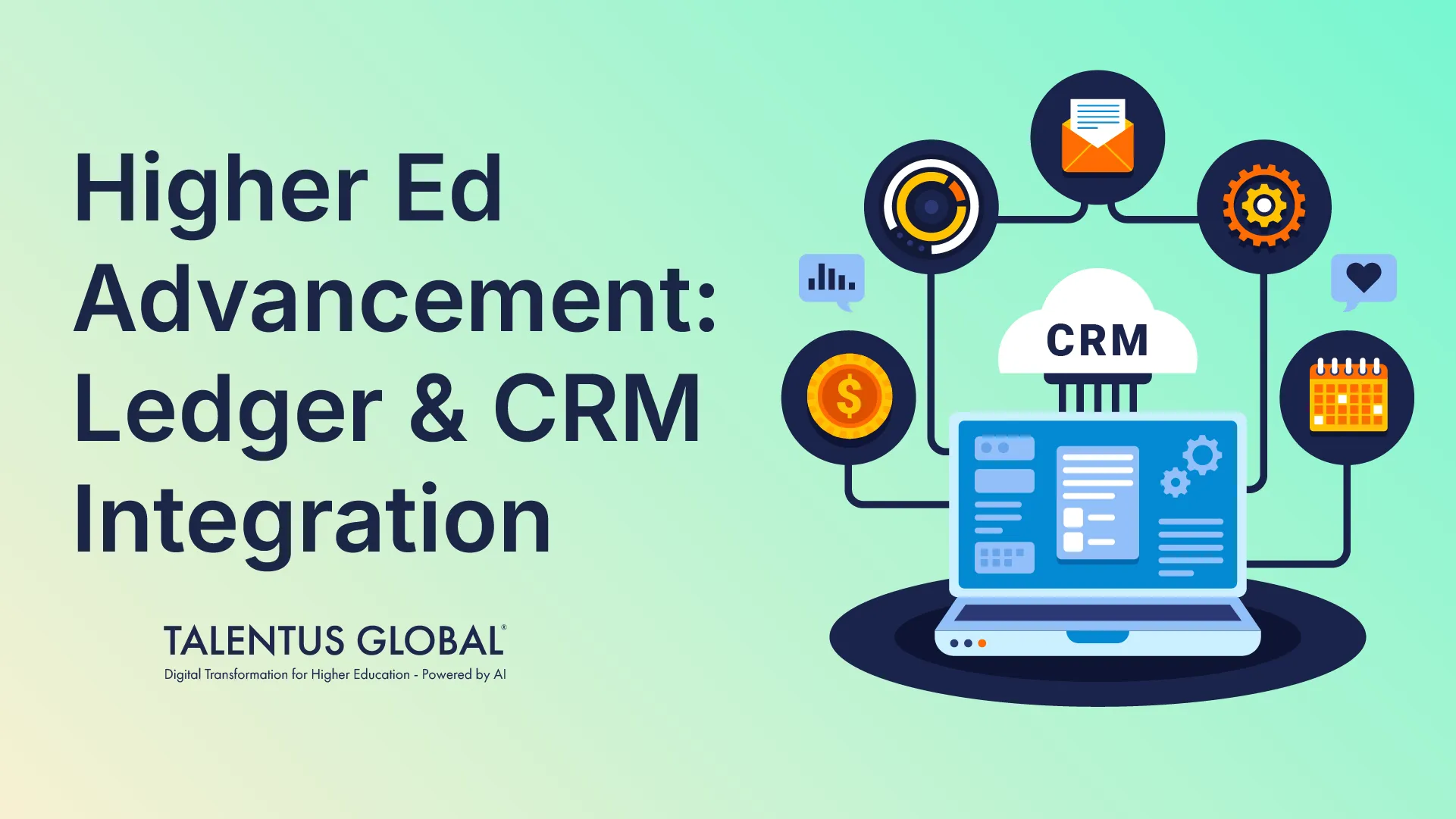
Streamlining university advancement operations requires an event-driven API integration layer that connects alumni CRMs directly to central ERP financial ledgers, delivering instant gift recognition, automated ledger posting, and audit-ready financial transparency.
The High Cost of Disconnected Advancement Data
Operating advancement pipelines on disconnected systems creates operational bottlenecks that directly impact fundraising performance and donor trust:
- Delayed Gift Recognition: Manual reconciliation between alumni CRMs and university accounting systems delays gift processing by days or weeks, frustrating donors waiting for tax documentation.
- Mismatched Corporate Matching Funds: Corporate gift-matching programs require strict verification. Fragmented ledgers lead to missed matching opportunities and unclaimed corporate donations.
- Inaccurate Donor Segmentation: When pledge payments, fund allocations, and recurring gifts fail to sync in real time, major gift officers engage donors using outdated financial data.
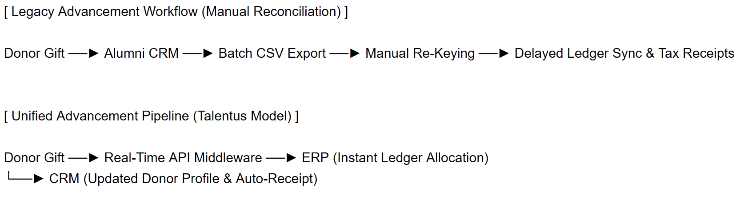
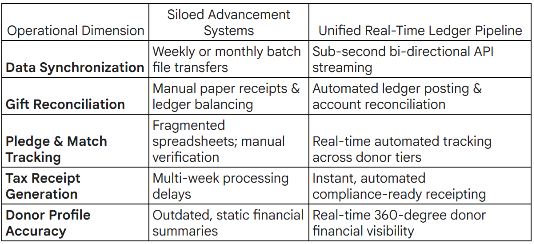
Siloed Advancement Systems vs. Unified Real-Time Ledger Pipeline
Connecting your alumni CRM directly to central financial accounting modernizes advancement efficiency:
3 Pillars of Unified Advancement Operations
Building an integrated, audit-ready advancement architecture requires three core technical pillars:
1. Bi-Directional API Integration Middleware
Establish an event-driven API middleware layer that bridges your donor management platforms (e.g., Element451 CRM) and central university financial ledgers like Thesis Elements. Synchronize gift transactions, fund allocations, and pledge updates instantly without altering underlying database schemas.
2. Automated Ledger Allocation & Rules Engines
Deploy automated accounting rules engines that instantly route incoming gifts, endowments, and matching funds to designated general ledger (GL) accounts. Automatically apply restricted-use rules and departmental constraints at the moment of transaction.
3. Real-Time Compliance & Tax Receipting Pipelines
Streamline post-gift operations. Automate the generation and distribution of IRS-compliant gift acknowledgments, tax receipts, and audit logs immediately upon payment settlement, eliminating manual back-office administrative overhead.
Modernize Your Advancement Operations with Talentus Global
Integrating advancement CRMs with enterprise university ledgers requires senior EdTech integration engineers, cloud database architects, and deep Higher Ed domain expertise.
Talentus Global provides dedicated nearshore LATAM software engineering pods to design, integrate, and scale your university advancement data pipelines.
For over 30 years, Talentus Global has been a trusted technical partner in enterprise software engineering and Higher Ed digital transformation. Our nearshore LATAM developers specialize in CRM integrations, enterprise ERP ledgers, API middleware development, and secure financial data pipelines.
- Operating 100% synchronously in your US timezone (EST/CST), our pre-vetted LATAM engineering pods deploy in as little as 48 hours to accelerate your advancement modernization without domestic hiring friction.
- 100% US Timezone Alignment: Collaborate synchronously with senior developers during standard EST/CST working hours.
- Deploy in 48 Hours: Bypass domestic recruitment delays and launch specialized integration engineering pods immediately.
- 95% Developer Retention Rate: Retain deep institutional knowledge and codebase stability across multi-year modernization initiatives.
Streamline your advancement pipelines and elevate donor engagement. Partner with Talentus Global today clicking here